


How to Create a Flexible Homeschool Schedule That Works for Your Family

As an Amazon Associate, I earn from qualifying purchases. This post may contain affiliate links. Read my disclosure policy.
One of the things I love most about homeschooling is the flexibility it gives our family. But figuring out how to use that flexibility hasn’t always been easy!
Over the years, I’ve tried different homeschool schedules, routines, and approaches. Some worked well, while others were complete failures.
In the beginning, I was so focused on making sure my kids had opportunities to socialize that academics sometimes took a backseat. We were constantly scheduling meetups, playdates, and activities.
And while I don’t regret making friendships a priority, I eventually realized that we needed a better balance.
After plenty of trial and error, we’ve finally found a homeschool routine that works for our family.
It’s not rigid, it doesn’t involve hours and hours of schoolwork, and no two days look exactly alike. But it gives us enough structure to stay on track while leaving plenty of room for friendships, activities, and family adventures.
Here’s what our homeschool schedule looks like today, what we’ve learned along the way, and some tips for creating a routine that works for your own family.
Finding Our Homeschool Rhythm Took Time
When we first started homeschooling, one of my biggest concerns was socialization.
I wanted my kids to have friends, experience group activities, and develop meaningful relationships with other children.
Because of that, I prioritized getting them out of the house and meeting other homeschool families.
We attended activities, scheduled playdates, and took advantage of just about every opportunity that came our way.
The problem was that schoolwork sometimes got pushed to the back burner.
I’d tell myself we’d get to it later in the day, but by the time we got home, everyone was tired or ready to relax.
Eventually, I realized that having a flexible homeschool schedule didn’t mean everything had to be optional.
We needed a routine that gave academics a consistent place in our day without sacrificing the freedom we loved about homeschooling.
The nice thing is that my kids have now found their people. They have a wonderful group of friends, plenty of opportunities to socialize, and activities they look forward to.
That has made it much easier to shift our focus toward completing schoolwork in the morning and leaving the rest of the day open.
Why We Do Homeschool in the Morning
These days, our general rule is simple:
Schoolwork comes first, and then the kids have the rest of the day to themselves.
That doesn’t mean we start school at exactly 8:00 AM every morning.
In fact, we don’t have a set starting time at all.
If we don’t have anywhere to be, I let my kids sleep until they’re rested. When they wake up, they can decide whether they want to eat breakfast first or get started on their schoolwork.
I don’t force them to eat breakfast if they’re not hungry, either.
I like that they can listen to their bodies instead of rushing through a morning routine just because the clock says it’s time.
We don’t have a designated homeschool classroom or assigned desks, either. My kids do their schoolwork wherever they feel comfortable. Sometimes that’s on the sofa, sometimes it’s on the floor, and sometimes it’s even under the table!
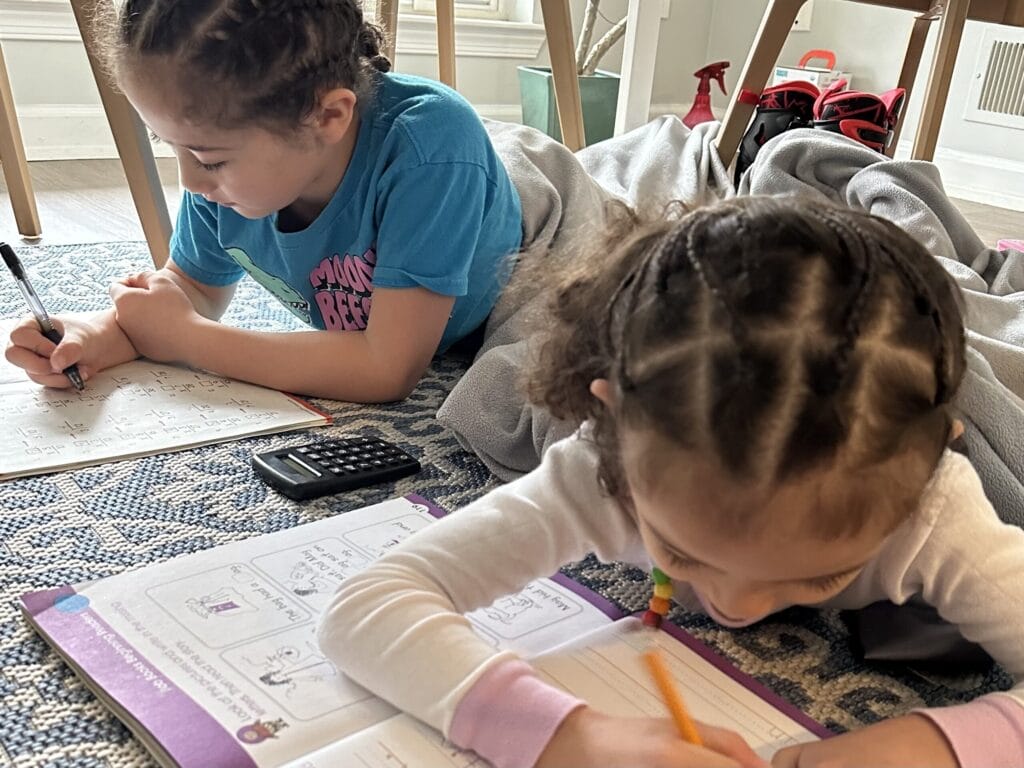
As long as they’re focused and getting their work done, I don’t really care where they sit. That’s another little freedom I love about homeschooling.
What matters to me is that their schoolwork gets done before they move on to other activities.
Of course, there are exceptions. Sometimes we have an early appointment, a field trip, or something special planned.
But on a typical day, getting schoolwork out of the way first has made a huge difference.
We no longer have unfinished assignments hanging over our heads in the afternoon, and the kids know exactly what’s expected of them.
More Free Time for the Things They Love
One of the biggest benefits of getting schoolwork done in the morning is that my kids have the rest of the day to do whatever interests them.
When the neighborhood kids get home from school, mine are free to head outside and play with their friends.
They also have plenty of time to work on their own projects, whether that’s drawing, crafting, building something with LEGO, or exploring a new interest.
They also love to read! My son is currently obsessed with the *Wings of Fire* series and has been finishing a book in about three days.
And honestly, I love that.
I don’t want every hour of their day to be planned out for them. I want them to have time to get creative, explore their interests, and decide how to spend their free time.
I also think there’s a lot of learning happening during those unstructured hours.
Whether they’re figuring out how to build something with LEGO, working through a creative project, or getting completely lost in a book, they’re developing skills and interests that go beyond their daily lessons.
To me, one of the greatest benefits of homeschooling is having the freedom to make time for the things that bring them joy.
How Long Does Our Homeschool Day Take?
One question I see homeschooling parents ask all the time is, “How many hours should we homeschool each day?”
For us, the answer varies.
Most days, my kids finish their schoolwork in about an hour. Other days, it might take an hour and a half or even two hours, depending on the lessons and how much help they need.
We don’t try to recreate a traditional six-hour school day at home.
When kids are working individually or in a small group, there’s often less time spent waiting, transitioning between activities, or reviewing material they already understand.
That doesn’t mean everyone should aim for a one-hour homeschool day. Every child learns differently, and the time needed will depend on their age, curriculum, abilities, and learning needs.
I’ve simply found that shorter, focused lessons work really well for my kids.
And if they’re understanding the material and making progress, I don’t see a reason to give them extra work just to fill the day.
What Subjects Do We Cover Each Day?
I’ve experimented with different ways of organizing our subjects, including focusing on certain subjects on specific days.
But I’ve found that doing a little bit of everything each day works best for us.
Our daily homeschool routine typically includes:
- Math: One lesson from The Good and the Beautiful.
- Science: A short lesson or assignment.
- Social Studies: A short lesson or assignment.
- Writing: Daily writing practice.
- Spelling: Daily spelling practice.
- Cursive: Handwriting practice.
We use the 180 Days workbooks for several subjects, which have been especially helpful in keeping our daily workload manageable.
Rather than assigning multiple pages of work, the kids generally complete one page from each workbook.
It’s simple, consistent, and not overwhelming.
I like that they get regular practice in different subjects without spending the entire day doing worksheets.
Of course, some lessons require more time or attention than others. We adjust as needed.
The goal isn’t to rush through everything. It’s to keep learning consistent and manageable.
Teaching My Kids to Learn Independently
One of my biggest goals as a homeschooling parent is to teach my children how to learn, not just what to learn.
My kids are currently in second and fifth grade, so we’ve had several years to build up to this level of independence.
It definitely didn’t happen overnight!
When they were younger, they needed much more hands-on guidance. As they’ve gotten older, I’ve gradually given them more responsibility for completing their assignments.
At this point, they’re fairly independent with their schoolwork. They know what needs to get done and can usually work through their lessons on their own.
I’m always available when they need help, but I don’t sit beside them and guide them through every single assignment.
Instead, I encourage them to read instructions carefully, think through problems, and use the resources available to them.
If they don’t understand something, I want them to try to figure it out rather than immediately relying on someone else to provide the answer.
Of course, that doesn’t mean I leave them struggling. Sometimes they need an explanation, a demonstration, or a little extra guidance.
But I love seeing them become more confident and resourceful learners.
To me, that’s one of the most valuable things homeschooling can teach.
Learning doesn’t stop when kids finish their schoolwork. Knowing how to ask questions, find reliable information, solve problems, and teach themselves new skills will benefit them throughout their lives.
We’ve used a variety of tools to support their learning and encourage independence over the years. If you’re curious about what we’ve tried, I’ve shared our experiences in my roundup of the best online homeschool resources.
What Our Weekly Homeschool Schedule Looks Like
Although our mornings generally follow the same routine, our afternoons and evenings vary throughout the week.
Here’s an example of how we balance academics, social activities, and family time.
| Day | Our Typical Routine |
|---|---|
| Monday | Morning schoolwork, followed by free time |
| Tuesday | Morning schoolwork and our weekly 4-H homeschool club |
| Wednesday | Morning schoolwork, free time, or playdates |
| Thursday | Morning schoolwork and a flexible afternoon |
| Friday | Morning schoolwork, activities, or outings |
| Weekends | Family adventures, friends, and downtime |
We also have a weekly library meetup with another homeschool family, along with cheerleading and wrestling on two weeknights.
This is just an example of what our week might look like. Our schedule isn’t set in stone, and activities occasionally change.
I purposely don’t fill every open afternoon with scheduled activities.
Having a few consistent commitments gives our week structure while leaving enough room for spontaneous plans, relaxation, and unstructured play.
And honestly, I think that free time is just as important as our scheduled activities.
Making Socialization a Priority Without Overscheduling
Socialization was one of my biggest priorities when we first started homeschooling, and it still is. The difference is that I no longer feel the need to say yes to every opportunity.
My kids have developed wonderful friendships and found a community where they feel comfortable and connected.
We participate in a weekly 4-H homeschool club, meet another homeschool family at the library, and have cheerleading and wrestling during the week.
And their friendships aren’t limited to other homeschoolers!
One of the things I love about our schedule is that my kids are usually finished with schoolwork by the time the neighborhood kids get home from school. They’re free to head outside and play with their friends.
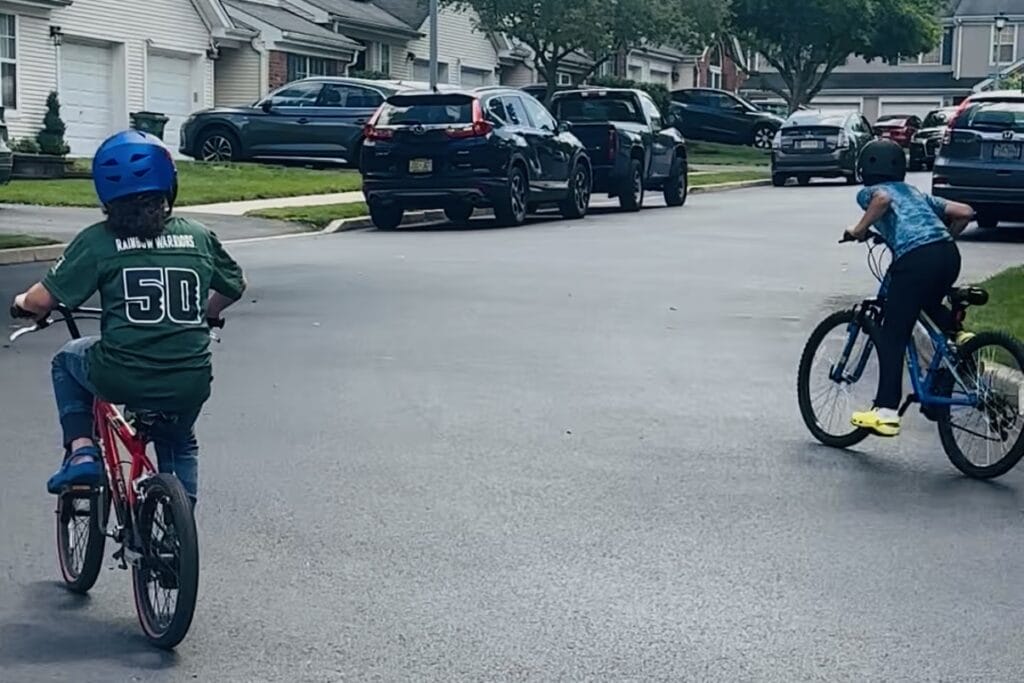
We also make time for occasional playdates, library programs, and other activities that interest us.
I’ve learned that socialization doesn’t have to mean constantly scheduling activities. Sometimes it’s as simple as letting kids head outside and play.
Now that my kids have established friendships, I feel much less pressure to fill our calendar. We have a handful of activities we enjoy, and plenty of free time to spend however we choose.
If you’re looking for more ideas, I’ve also shared some tips for helping homeschooled kids build social connections.
Leaving Room for Spontaneous Learning
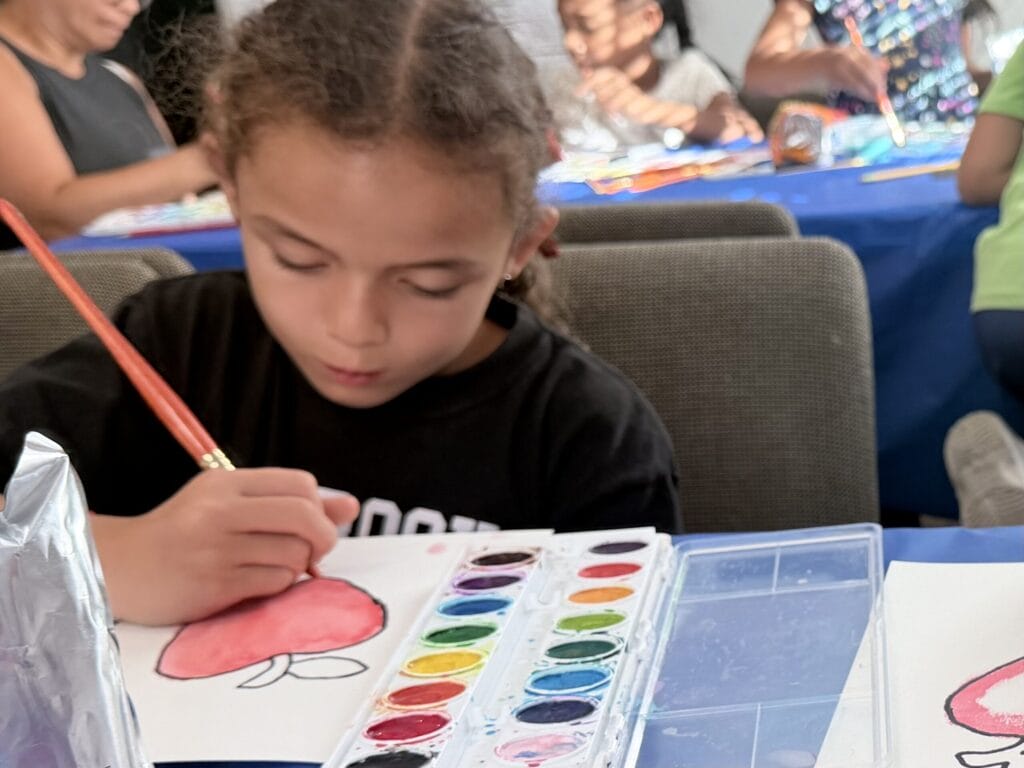
Another thing I love about our flexible homeschool schedule is being able to take advantage of learning opportunities outside the house.
We’re big fans of our local library and regularly look for interesting activities and events.
For example, we have a Pokémon watercolor painting activity coming up that the kids are excited about.
It may not look like a traditional school lesson, but it’s an opportunity to explore creativity, practice artistic skills, and enjoy a shared experience with other kids.
We also love educational outings and field trips.
One of our recent outings was a trip to Philadelphia to learn more about the American Revolutionary War.
Experiences like this allow my children to connect what they’re learning with actual places, people, and historical events.
I love that we can make these outings part of our homeschool experience rather than treating them as something completely separate from education.
And because we don’t have every afternoon scheduled, we can usually fit in activities that interest us.
Why We Keep Our Weekends Flexible
Our weekends are generally reserved for family time, outings, and catching up with friends who attend traditional schools.
We might spend a day exploring somewhere new, visiting a museum, attending an event, or simply relaxing at home.
I don’t usually plan formal homeschool lessons on the weekends.
That doesn’t mean learning stops, though!
Learning happens during conversations, family outings, trips to new places, and everyday experiences.
One of the things I appreciate most about homeschooling is that it has helped me recognize how much learning happens naturally when kids have the freedom to explore their interests.
Homeschool Scheduling Mistakes I’ve Made
As much as I love our current routine, we definitely didn’t get here overnight.
There have been plenty of mistakes along the way!
1. Giving My Kids Too Much Work
One of my biggest mistakes was assigning too much schoolwork.
I thought that more assignments meant they were learning more.
But instead, my kids would get overwhelmed, frustrated, and discouraged.
Eventually, I realized that quality matters more than quantity.
Using manageable daily assignments, like the single-page lessons in our 180 Days workbooks, has made schoolwork feel much more achievable.
And when something needs extra practice, we can spend more time on that particular skill without overwhelming them with unnecessary assignments.
2. Letting Them Do Schoolwork Whenever They Wanted
Another mistake was being a little too flexible about when schoolwork needed to happen.
At one point, I let the kids decide when they wanted to complete their assignments.
That sounded great in theory, but it didn’t always work out.
Sometimes schoolwork got pushed later and later, and by the end of the day, nobody wanted to do it.
Now, our expectation is clear: schoolwork needs to be completed before other activities.
There are occasional exceptions, but having that consistent expectation has helped tremendously.
I’ve learned that flexibility works best when it’s paired with a little structure.
3. Trying to Fit Too Much Into Our Schedule
Another lesson I’ve learned is that just because an activity sounds fun or educational doesn’t mean we need to participate.
There are so many wonderful opportunities available to homeschool families, but we only have so much time and energy.
These days, I’m much more selective about what we commit to.
I’d rather have a few activities my kids genuinely enjoy than fill our calendar with things just because they’re available.
Having open days gives us the flexibility to say yes to something spontaneous without feeling overwhelmed.
Tips for Creating a Flexible Homeschool Schedule
If you’re struggling to find a homeschool routine that works for your family, here are a few things I’ve learned through trial and error.
- Start with your family’s priorities. Think about what’s most important right now. For us, academics are a priority in the morning, but friendships, activities, and family experiences matter too.
- Create a routine instead of a rigid schedule. You don’t necessarily need a detailed timetable. Our starting time varies, but the expectation that schoolwork comes first stays the same.
- Keep lessons manageable. More work doesn’t always mean more learning. Pay attention to how your children respond to their workload and adjust as needed.
- Encourage independence. As your children become ready, give them opportunities to manage their assignments, solve problems, and use resources on their own.
- Don’t overschedule. Homeschool groups, sports, classes, and meetups are wonderful, but you don’t have to do everything. Leave time for free play, creative projects, and relaxation.
- Be willing to make changes. Your homeschool routine doesn’t have to stay the same forever. What works today might not work next year, and that’s okay!
Finding a Homeschool Rhythm That Works for Your Family
If there’s one thing I’ve learned over the years, it’s that the best homeschool schedule is the one that works for your family—and that schedule will probably change as your kids grow.
Our routine looks very different from when we first started homeschooling. We’ve made mistakes, tried different approaches, and adjusted our priorities along the way.
These days, we have a good balance of academics, social activities, and free time. My kids are becoming more independent learners, they’ve developed wonderful friendships, and they have plenty of time to explore their interests.
And for us, that’s what homeschooling is all about.
Don’t be afraid to experiment, make changes, and let go of what’s not working.
You don’t need a perfectly planned homeschool day. You just need a routine that helps your family thrive.
More Homeschooling Ideas and Resources
Looking for more ways to make learning at home fun and manageable? Explore our homeschooling ideas and resources for helpful tips, hands-on activities, and inspiration for your homeschool journey.