

The Best Online Homeschool Resources We’ve Tried
As an Amazon Associate, I earn from qualifying purchases. This post may contain affiliate links. Read my disclosure policy.

Finding homeschool resources can be overwhelming. There are so many websites, apps, subscriptions and curriculum programs promising to make homeschooling easier that it can be hard to know what is actually worth using.
After years of homeschooling, one of the biggest things I’ve learned is that a resource can be excellent and still not be right for your child.
We’ve tried programs that other homeschool families absolutely love and discovered they just didn’t work well for us. We’ve also found resources that completely changed how my kids felt about a subject.
Our homeschool has never been an all-in-one curriculum. We piece things together depending on the subject, what my kids need at the time and how they learn best.
I’ve also noticed that my kids generally retain more when they actually have to write things down instead of completing everything on a screen.
That doesn’t mean we avoid online learning. We definitely use it. I just try to use technology where it genuinely makes learning easier or more enjoyable and balance it with workbooks, books, writing, hands-on activities and real-world experiences.
Here are some of the online homeschool resources we’ve actually tried, what worked for us, what didn’t and what I think each one is best for.
1. Night Zookeeper
Best for: Making writing fun, especially for reluctant writers
Night Zookeeper is easily one of our favorite online homeschool resources.
For a while, my kids were extremely opposed to writing. Sitting down with a traditional writing assignment was not something they looked forward to.
Night Zookeeper changed that.
Instead of writing feeling like another school assignment, kids enter an imaginative online world where they create characters, complete writing challenges and work on stories while practicing skills like spelling, grammar and vocabulary.
For us, it made writing fun again.
That’s a pretty big deal.
Why we love Night Zookeeper
– Makes writing feel fun instead of forced – Encourages creative writing – Includes spelling, grammar and vocabulary practice – Gives kids plenty of opportunities to actually write – Kids can work fairly independently – Works especially well for kids who resist traditional writing assignments
Normally, I prefer my kids to do a good portion of their schoolwork away from screens because I think they retain more when they physically write things down.
Night Zookeeper is the exception.
They’re still writing, creating and thinking while using it — and most importantly, they actually want to do it.
If you have a child who groans every time you mention writing, this is one resource I would definitely look into.
Want to try Night Zookeeper? Use my Night Zookeeper referral link and you’ll get $5 off your first payment. I’ll receive $5 off a future payment too.
Referral disclosure: If you sign up through this link, you’ll receive $5 off and I’ll receive $5 off a future payment.
2. The Good and the Beautiful Math
Best for: Kids who benefit from video instruction combined with written math work
We used Khan Academy for math for a while, but eventually realized that it wasn’t the best fit for my child.
We switched to The Good and the Beautiful Math, and the combination of instruction and written work has been a much better fit for us.
It isn’t a fully online math program. Depending on the level, students use video instruction along with a physical course book or a free downloadable PDF.
And honestly, that combination is one of the things I like most about it.
My kids seem to retain math concepts better when they actually work problems out on paper instead of answering everything on a computer.
A note for secular homeschool families
The Good and the Beautiful is a Christian homeschool curriculum.
We are not a religious homeschool family, and it is definitely more Christian than the curriculum I would normally seek out.
At the same time, we’re comfortable with our kids being exposed to different beliefs and perspectives. For our family, the math program works well enough that we’re comfortable using it and discussing or adapting things when necessary.
Another secular homeschool family may feel differently, so I would look through the curriculum yourself before deciding whether it works for your family.
Why it works for us
– Combines instruction with written math practice – Gets kids working problems out on paper – Gives us more structure than practice-only websites – Free PDF curriculum is available – Students aren’t staring at a screen for the entire math lesson
Switching our math curriculum also reminded me of something important:
A popular curriculum doesn’t have to work for your child.
Sometimes changing what you’re using is exactly what your child needs.
3. Typing.com
Best for: Learning to type
Typing.com is what my kids used to learn how to type, and we’ve had a great experience with it.
It’s also free.
The lessons gradually teach keyboard placement, accuracy and speed, and my kids were able to work through much of it independently.
Why we like Typing.com
– Free – Easy for kids to use independently – Teaches proper keyboard placement – Builds speed and accuracy gradually – Short lessons are easy to add to the homeschool day – Teaches a practical skill kids will actually use
Typing is one of those skills that’s easy to overlook when kids are young.
Then suddenly they’re expected to type longer writing assignments, do research and navigate computers independently.
I’m glad we added it before they reached that point.
4. XtraMath
Best for: Free, simple math fact repetition
XtraMath is about as straightforward as it gets.
It’s free and focuses on practicing:
– Addition – Subtraction – Multiplication – Division
That’s really it.
There aren’t elaborate lessons or a full math curriculum. It’s simply a way for kids to repeatedly practice basic math facts.
And sometimes that’s exactly what you need.
Why we use XtraMath
– Free – Simple – Easy to use – Good for repetition – Reinforces basic math facts – Requires very little parent preparation – Easy to use alongside another math curriculum
I wouldn’t use XtraMath to actually teach math.
For us, it’s simply math fact practice — nothing more, nothing less.
That simplicity is exactly why it works as a supplemental resource.
5. K5 Learning
Best for: Free worksheets and extra elementary practice
We don’t currently use K5 Learning anymore, but I still think it’s an excellent free resource to know about.
It was especially useful when my kids were younger and I needed another worksheet or some extra practice for a specific skill.
Sometimes you don’t need another curriculum.
You just need another worksheet on fractions, grammar or reading comprehension.
Why I still recommend K5 Learning
– Lots of free printable resources – Easy to use for additional practice – Especially useful for elementary students – Helpful for math, reading and language arts – Works well alongside another curriculum
This isn’t something I would personally build our entire homeschool around.
But it is definitely something worth bookmarking.
If you’re like me and sometimes just need a straightforward worksheet, you may also want to read my honest review of 15Worksheets.com, another printable worksheet resource we’ve used.
6. Khan Academy
Best for: Free instruction, review and getting another explanation of a concept
Khan Academy is a genuinely great resource.
It’s free, there are instructional videos and practice activities, and it covers a huge range of subjects and grade levels.
We used Khan Academy for math for quite a while.
But eventually I had to admit that it wasn’t working particularly well for my child.
That doesn’t mean Khan Academy isn’t good.
It simply wasn’t the best way for my child to learn math.
Once we switched to a curriculum that involved more pencil-and-paper work, we found something that fit our learning style better.
I would still absolutely use Khan Academy when we need:
– Another explanation of a difficult concept – Review – Extra practice – Help filling a learning gap – A free lesson on a specific topic
For us, Khan Academy works better as a supplemental resource than as our primary math curriculum.
I think that’s worth mentioning because Khan Academy is recommended constantly in homeschool groups.
If everybody else loves something and your child doesn’t, that doesn’t automatically mean you need to keep forcing it.
It may simply not be the right fit.
7. IXL
Best for: Extra practice for kids who like the online format
IXL is an interesting one because we have friends who absolutely love it.
We tried it.
My kids did not.
My biggest issue with the online program is that it felt much more like answering practice questions than receiving actual instruction.
For us, that means I view IXL as supplemental practice rather than a complete curriculum.
And because my kids tend to retain information better when they have to physically write something down, spending more time answering questions on a screen wasn’t particularly helpful for them.
I do, however, like IXL’s workbooks much more than the online program.
That format simply works better for my kids.
What I think IXL does well
– Covers a huge number of skills – Makes it easy to find practice for one specific concept – Organized by grade and subject – Gives kids plenty of repetition – Works well for families whose kids enjoy digital practice
Why the online program wasn’t for us
– Felt more like practice than actual instruction – Too much answering questions on a screen for our learning style – My kids retain more when they write things down – It simply wasn’t something my kids enjoyed using
This is one of the best examples of why I’m hesitant to call any homeschool program the “best.”
Our friends love IXL.
We don’t.
Both experiences can be true.
What About Generation Genius?
Generation Genius is one I’m interested in, particularly for science.
I want to be transparent, though: we have only tried some of the free content. We haven’t had a paid subscription.
From what I’ve seen, the videos are engaging and explain science concepts in a way that seems very kid-friendly. It’s something I would consider using more in the future.
It simply hasn’t been a priority in our homeschool budget.
Right now, our biggest academic priorities are building strong foundations in:
– Math – Reading – Writing
Science is still important to us, but at this stage we keep it fairly simple.
We use science workbooks along with books, educational videos, field trips and hands-on activities.
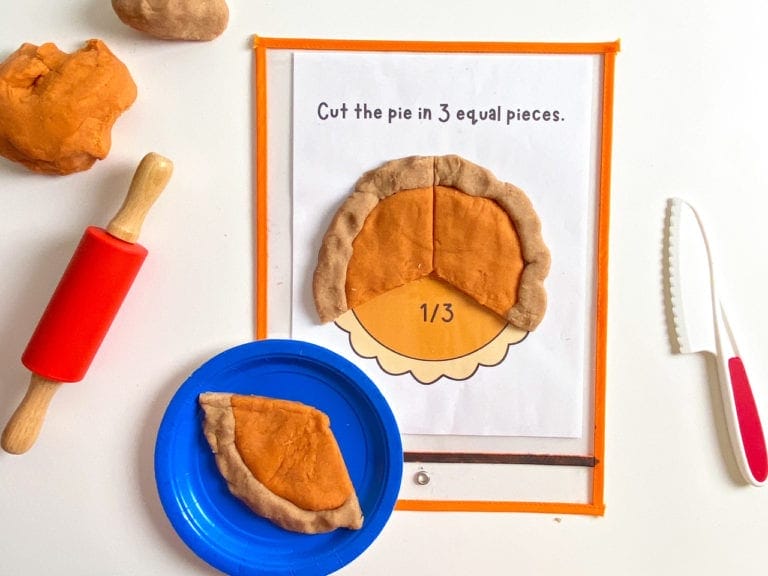
For example, we’ve used activities like our space orbits playdough activity to help turn an abstract science concept into something kids can actually see and manipulate.
So while Generation Genius looks like a great supplemental science option, I can’t personally review the full paid program the same way I can Night Zookeeper, Typing.com or the other resources we’ve used regularly.
Don’t Forget Your Library, YouTube and Free Resources
Not every useful homeschool resource needs to be a homeschool subscription.
We use our library, educational YouTube videos, printable resources and real-world experiences all the time.
YouTube can be especially useful when one of those random homeschool questions comes up:
How does an octopus change color?
Why does the moon orbit Earth?
What did Philadelphia look like during the American Revolution?
How does a volcano erupt?
Instead of turning every question into a formal lesson, sometimes we’ll watch a video, find a library book or look for a hands-on activity.
One resource can easily lead to another:
Video → question → book → activity → field trip
We’ve done the same thing when preparing for field trips. Before visiting the Washington Monument with our homeschool group, for example, we learned about it first and created Washington Monument printable activities so the kids understood more about what they were going to see.
Those connections are one of my favorite parts of homeschooling.
How We Choose Homeschool Resources
After trying quite a few programs over the years, I’ve become much less interested in finding whatever program everyone says is “the best.”
Instead, I ask:
What problem am I trying to solve?
If my kids are resisting writing, I need something that makes writing more enjoyable.
That’s where Night Zookeeper has been amazing for us.
If my child isn’t retaining math through an online program, I need more written math practice.
That’s one reason The Good and the Beautiful works better for us.
If we simply need multiplication repetition, I don’t need a new curriculum.
XtraMath can handle that.
And if I just need another worksheet on a specific skill, I can use something like K5 Learning or another free homeschool printable.
Once I stopped expecting every homeschool resource to be a complete solution and started looking at them as individual tools, choosing what to use became much easier.
Online Learning vs. Pencil and Paper
One of the biggest things I’ve learned about my own kids is that just because they can complete something online doesn’t necessarily mean that’s the best way for them to learn it.
They generally retain more when they have to:
– Write an answer – Work out a math problem – Draw something – Take notes – Create something – Explain what they learned
That’s why I like balancing online programs with written and hands-on homeschool activities.
For example, something as simple as our Halloween Candy Math activity gets kids sorting, counting, graphing and comparing instead of clicking an answer on a screen.
That doesn’t mean screens are bad.
Night Zookeeper is probably the best example in our house of technology doing exactly what I want technology to do: making my kids excited about a subject they previously resisted.
For me, the goal isn’t avoiding technology.
It’s figuring out when technology actually improves learning.
Our Homeschool Priorities Right Now
We’re also not trying to give every subject equal amounts of time and money at every stage.
Right now, I care most about making sure my kids develop really solid:
Math, reading and writing skills.
Those are the foundations I want to spend our time and homeschool budget building.
Science still happens.
History still happens.
Art, field trips, projects and all of those other subjects still happen too.
But I don’t feel like we need an expensive online subscription for every subject.
Sometimes a workbook is enough.
Sometimes a library book is enough.
Sometimes a free website is enough.
And sometimes you find a program like Night Zookeeper that solves a problem your family was genuinely struggling with, and it’s worth paying for.
I’d rather spend our homeschool budget on the resources that make the biggest difference for my kids than feel like we need subscriptions for everything.
What We’ve Learned From Trying Different Homeschool Programs
A great program can still be wrong for your child.
Khan Academy is an excellent free resource.
It wasn’t the right primary math program for us.
IXL has families who absolutely love it.
My kids didn’t.
Night Zookeeper was the opposite. My kids resisted writing, and then we found something that made them want to write.
That’s homeschooling.
You try things.
You pay attention.
And you adjust.
You also don’t need five different math programs just because five people recommended them.
Start by figuring out what your child actually needs.
Maybe it’s:
– A complete math curriculum – More writing motivation – Multiplication practice – Typing lessons – Reading comprehension practice – A few extra worksheets
Then find the resource that solves that particular problem.
Don’t Be Afraid to Switch
If something isn’t working, you can change it.
You aren’t failing because you switch curriculum halfway through the year.
And you don’t have to keep forcing a program just because other homeschool parents love it or because you’ve already paid for it.
Sometimes discovering what doesn’t work teaches you just as much about your child as discovering what does.
You Don’t Need the Perfect Homeschool Curriculum
Our homeschool is still very much mix and match.
We use programs we love, free resources when we need them, books, workbooks, online programs, projects, field trips, free printables and plenty of learning that wasn’t planned at all.
Some resources stay in our homeschool for years.
Some work for a season.
And some are genuinely great programs that simply aren’t right for my kids.
I’ve become completely comfortable with that.
The goal isn’t to use the most popular homeschool curriculum.
It’s to figure out how your own children learn and build your homeschool around them.
And if something stops working?
Change it.
That’s one of the best parts of homeschooling.
Keep Exploring
Looking for more ways to make homeschooling flexible and hands-on? Browse our homeschool resources, learning activities and free printables for more ideas you can use at home.