How To Turn Your Kitchen Into a Mini Science Lab for Kids
As an Amazon Associate, I earn from qualifying purchases. This post may contain affiliate links. Read my disclosure policy.
The kitchen isn’t just the heart of your home — it’s also a perfect spot for hands-on learning. For curious children, everyday ingredients and tools can unlock a world of discovery. In just a few rounds of mixing, measuring, or melting, you can introduce basic concepts in chemistry, physics, and math — and end each lesson with something delicious to share.
Bread: Living Science in Action
Making homemade bread is a simple, powerful way to teach kids about how ingredients work together — and how a living organism like yeast affects the dough.
- Explain the magic of yeast. While mixing the dough, describe how yeast “eats” the sugar and releases tiny gas bubbles that make the dough rise.
- See — and feel — the transformation. As you knead, kids will notice the dough change from sticky to stretchy. It’s a tactile, sensory experience that brings science to life.
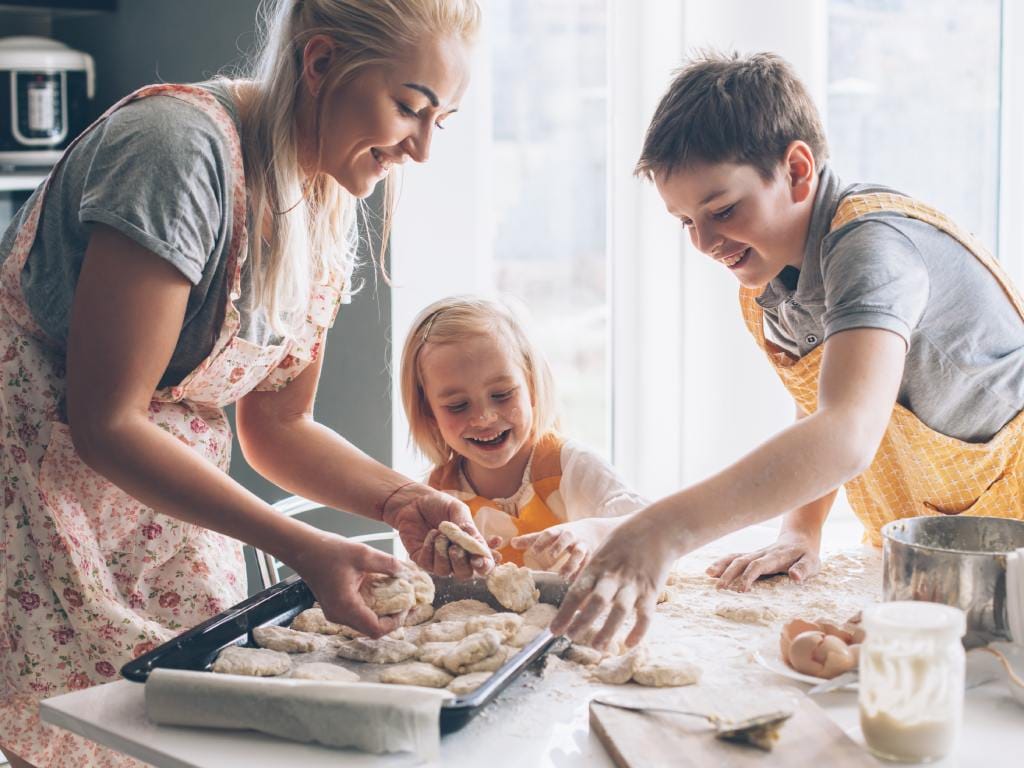
- Hands-on involvement. Let children shape their own loaves or rolls — they’ll be thrilled to take ownership over something they helped create.
Pastry Science: Layers, Butter, and Steam
Baking flaky pastries offers a fun, visual way to demonstrate how temperature, technique, and timing work together — and how science makes things “just right.”
When you fold and roll dough to create a pastry, you’re actually crafting thin layers of dough separated by butter. As the pastry bakes, the butter melts and the water inside becomes steam. That steam puffs up the layers and gives you light, crispy pastry.
If you want to dig deeper into the science, talk about how factors like butter temperature and dough handling affect flakiness. Let your child compare cool butter vs. warm butter, or see what happens when you fold the dough more times. Watching different results sparks real curiosity and some great questions.
Matter in Action: Solid, Liquid & Gas
No fancy equipment needed — just everyday kitchen items and a bit of curiosity. These simple experiments help kids understand basic states of matter:
- Melting butter or chocolate: Watch it transition from solid to liquid.
- Freezing fruit juice into popsicles: Observe a liquid becoming solid.
- Boiling water: Let kids see steam rising — liquid turning to gas.
Each kitchen experiment awakens the senses and helps children connect what they see with underlying scientific ideas. Encourage them to ask questions and notice how each ingredient changes form.
Don’t forget to check out our homemade ice cream science experiment — it’s the perfect hands-on way to see liquids turn into solids fast.
Why It Works
- Everyone has what you need. Chances are, you already keep flour, butter, water, chocolate, and juice in the kitchen.
- It’s sensory and interactive. Kids engage with texture, smell, temperature — and the kitchen becomes a hands-on classroom.
- Learning becomes memorable. Real observations (dough rising, chocolate melting, steam forming) anchor abstract concepts in everyday experience.
- Bonding and tasty results. The lessons end with something you can bake, freeze, or eat together — reinforcing the idea that science is part of daily life.
Final Thoughts
Turning your kitchen into a science lab doesn’t require specialized tools — only a little time, curiosity, and willingness to explore. Whether you’re baking bread, folding pastry dough, or simply watching butter melt, you’re opening the door for your kids to see the science in everyday life. And who knows? You might spark a lifelong love for exploration — while filling your home with delicious smells and sweet memories.