
How to Store Homemade Baby Food (Freezing & Thawing Tips)
This post was updated on October 19, 2026.

As an Amazon Associate, I earn from qualifying purchases. This post may contain affiliate links. Read my disclosure policy.
Making homemade baby food is a wonderful way to offer your little one different flavors, but knowing how to store homemade baby food safely is just as important as making it. When I started making purees for my kids, I quickly learned that a few good containers, a labeling system, and freezer portions made everything easier.
In this guide, I’m sharing my favorite baby food storage tips, plus how long homemade purees last in the refrigerator or freezer, how to thaw them, and how to serve them safely.
How Long Does Homemade Baby Food Last?
For homemade baby food, a conservative storage guideline is 1–2 days in the refrigerator and 1–2 months in the freezer for best quality. Refrigerate or freeze promptly in clean, covered containers. These recommendations are based on FoodSafety.gov’s baby food safety guidance.
Store refrigerated baby food at 40°F (4°C) or colder and frozen food at 0°F (-18°C) or colder. Never put food that has been eaten from your baby’s bowl back into the main storage container.
3 Easy Tips for Storing Homemade Baby Food
1. Choose Good Baby Food Storage Containers
Good containers make all the difference, especially when you’re preparing several small portions at once! Look for containers that are food-safe, easy to clean, leak-resistant, and appropriately sized for your baby’s portions.
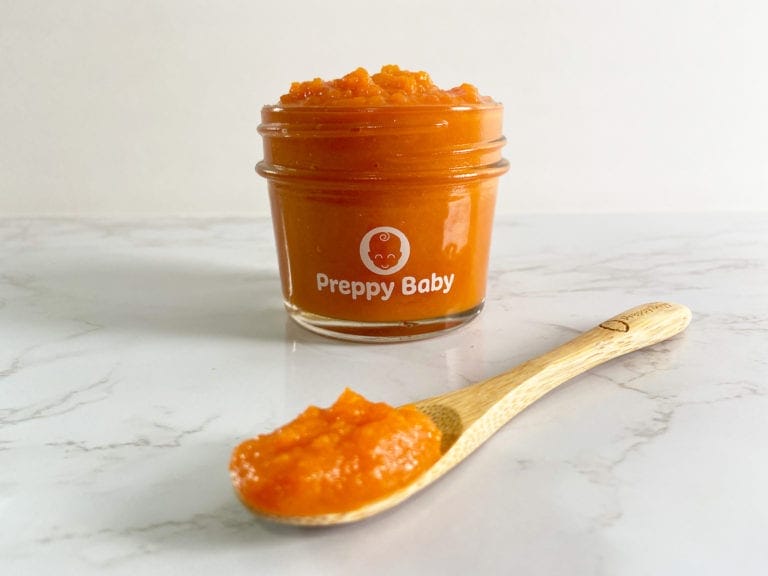
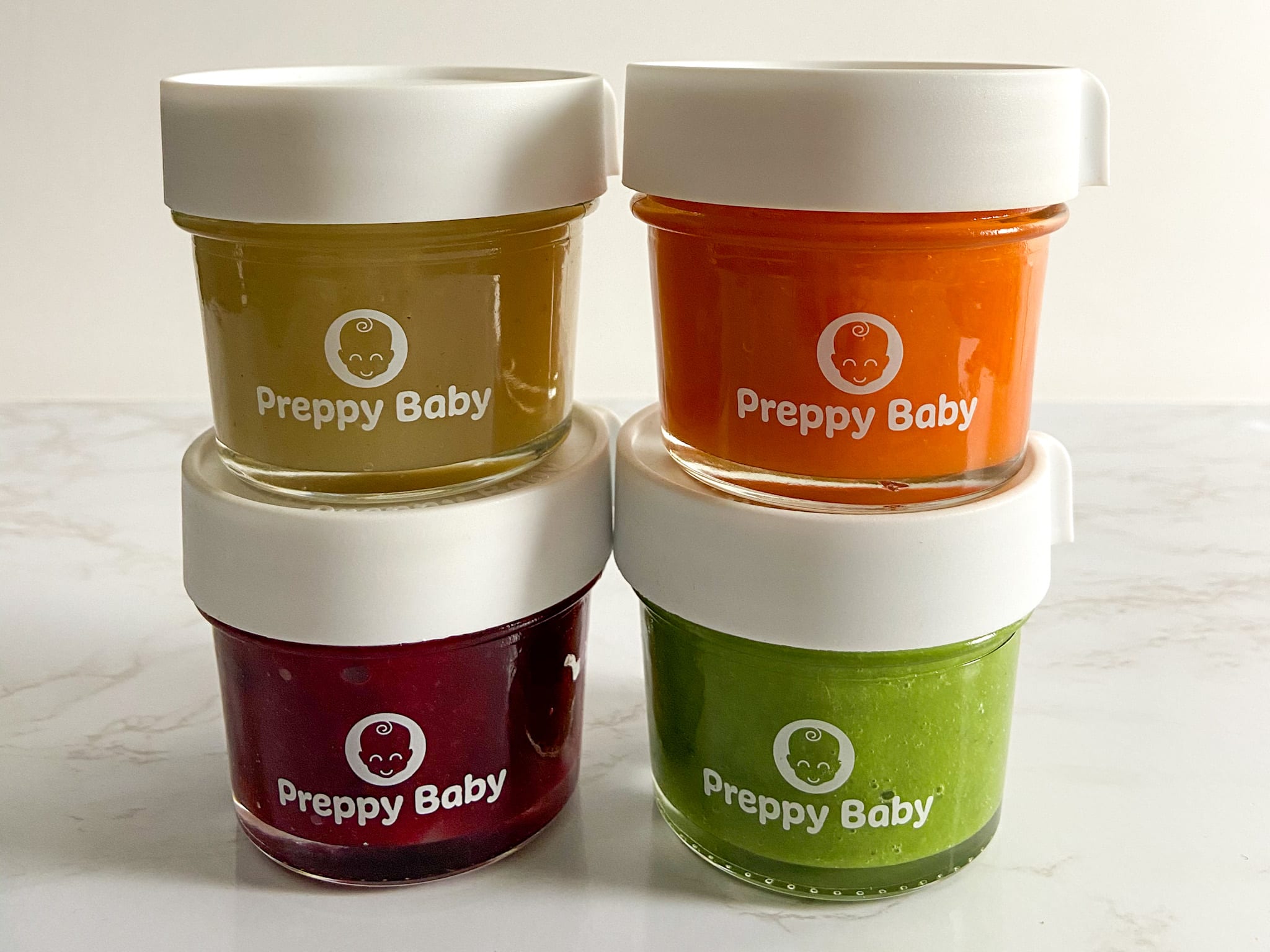
I was gifted these Preppy Baby food storage containers and loved how neatly they stacked in my refrigerator. The glass design also made it easy to see what was inside.
If you use glass containers, check the manufacturer’s current instructions before freezing, microwaving, or dishwashing them. Not every lid or container is suitable for every use. Always allow hot food to cool enough for safe handling and follow the product’s instructions to avoid thermal shock.
2. Label Every Container
Mom brain is real! It can be surprisingly hard to remember what you made, especially when you have several similar-looking purees in the freezer.
Label each container or bag with the food name and the date you made it. If you’re combining ingredients, write those down too. This makes it easier to use the oldest portions first and keep track of what your baby has tried.
The Preppy Baby containers I used came with a dry-erase pen, which made labeling easy. If you’re using another type of container, these food labels are another handy option.
3. Freeze Baby Food in Small Portions
Ice cube trays are one of my favorite tricks for making homemade baby food ahead of time. Instead of freezing a large container, portion the puree into small amounts so you can thaw only what you need.
You can use dedicated baby food freezer trays or clean easy-release ice cube trays with removable lids. Use freezer-safe trays with covers to protect the food.
Once the cubes are completely frozen, transfer them into a labeled, freezer-safe freezer bag or reusable silicone bag. Press out excess air, seal tightly, and return the portions to the freezer promptly.
My tip: Freeze a few different purees rather than a huge batch of just one. That gives you variety and helps prevent waste as your baby starts enjoying more textures.
How to Freeze Homemade Baby Food Step by Step
- Cool and portion: After cooking, transfer the puree into shallow containers or freezer trays and refrigerate or freeze promptly. Do not leave it at room temperature for more than two hours.
- Cover: Use a clean, freezer-safe tray with a lid or cover securely.
- Freeze: Place the tray on a level shelf until the portions are solid.
- Transfer and label: Move frozen portions into a sealed freezer-safe bag or container labeled with the recipe and date.
- Use within 1–2 months: For best quality, rotate through the oldest portions first.
How Do You Thaw Frozen Baby Food Safely?
The simplest method is to transfer a frozen portion into a covered container in the refrigerator and let it thaw there. Never thaw baby food on the kitchen counter.
If you need a portion more quickly, you can heat it directly from frozen on the stovetop or, for suitable fruit and vegetable purees, in a microwave-safe dish. Stir thoroughly so it heats evenly.
Can You Microwave Homemade Baby Food?
You can microwave some fruit and vegetable purees, but always remove the food from its storage jar and transfer it into a microwave-safe dish. Heat in short intervals, stir well, let it stand for at least 30 seconds, and check the temperature throughout before feeding. The food should feel lukewarm, not hot.
Important: FoodSafety.gov advises against microwaving baby foods made with meat or eggs. Also, do not microwave breast milk or infant formula; warm those separately using recommended methods if needed.
How Much Baby Food Should I Make at Once?
I recommend starting with smaller batches—perhaps a week or two of different purees—rather than filling the freezer with a month of the same thing. Babies’ appetites and texture preferences can change quickly as they develop their feeding skills.
As your baby becomes ready for thicker textures, you can blend with less liquid, mash appropriate foods with a fork, or combine previously prepared vegetable purees with soft, well-cooked grains such as quinoa or rice. Make sure every combination is suited to your baby’s development and has been handled and stored safely.
Why Freeze Homemade Baby Food?
A freezer stocked with small portions means you can offer different foods without starting from scratch every day. It can save time, cut down on food waste, and make busy mealtimes much easier.
I also like that having a variety of ingredients on hand makes it simple to introduce different flavors and textures as my baby grows. If you’re interested in that approach, read my post about raising an adventurous eater.
Homemade Baby Food Storage FAQs
Can I put leftovers from my baby’s bowl back in the refrigerator?
No. Saliva from a used spoon can introduce bacteria into the food. Serve a small portion in a separate bowl and discard any leftovers from that bowl.
Do I need special baby food freezer trays?
No. Clean, food-safe freezer containers or lidded ice cube trays work fine. Choose something that seals well and makes it easy to remove individual portions.
Can I refreeze thawed baby food?
For a simple, cautious approach, thaw only what you plan to use and avoid refreezing portions intended for your baby—especially anything that has been warmed or served. Keep food refrigerated during thawing and discard any portions that were left out too long.
How long can homemade baby food sit at room temperature?
Refrigerate perishable baby food within two hours of preparation or serving, and sooner in hot conditions. Do not leave purees sitting out for extended periods.
A Quick Baby Food Safety Reminder
Disclaimer: These tips are general food-storage information, not a substitute for individualized pediatric or medical advice. Always follow safe food-handling practices, adjust food texture to your baby’s developmental stage, and consult your pediatrician about feeding or allergy concerns.