

Teaching Children the History of American Mining
Some of the content in this post was provided by a contributor. We only share resources we think are helpful.
History lessons often focus on wars, political figures, and the moments memorialized in monuments. However, they may spend less time exploring the everyday industries that helped shape the country.
Mining played a major role in American expansion and industrial development. Materials pulled from the earth were used to build railroads, roads, buildings, tools, machinery, and countless other necessities. Mining history also offers opportunities to discuss workers’ experiences, Indigenous communities, immigration, labor movements, and environmental change.
If you want to teach your child about U.S. mining history beyond well-known events such as the Gold Rush, here are a few ways to get started.
Start With a Book Written for Kids
Children’s nonfiction about mining history is often more engaging than a standard textbook chapter. Books written for middle-grade readers may explain how different minerals were extracted, what tools miners used, and what daily life was like in mining communities.
Take your child to the library and look for books about mining history together. You can also buy one or two books online and assign a chapter during history time.
After reading, ask your child a few simple questions about the chapter. Talking through the material can help your child remember and understand it instead of simply skimming the pages.
You might also ask what surprised them, what working conditions were like, and how mining affected the surrounding community.
Visit a Mining Museum
Museums dedicated to American mining history can be found across the country, particularly in the West and Appalachia. The National Mining Hall of Fame and Museum in Leadville, Colorado, features exhibits about minerals, mining technology, and the people and communities connected to major mining eras.
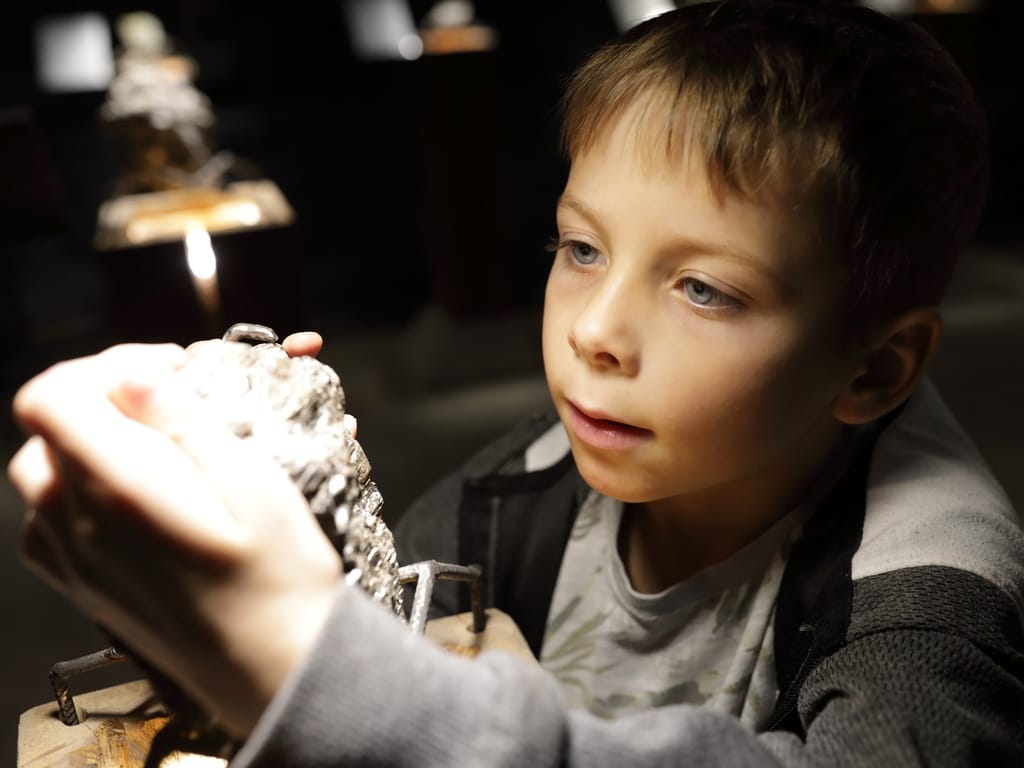
Museum exhibits and historical artifacts allow your child to picture the work instead of only reading about it. Seeing equipment, minerals, photographs, and recreated settings can make mining history much easier to understand.
Search for mining museums, geology museums, historical societies, or former mining towns near your home. Even a small local museum may have exhibits related to the minerals and industries that shaped the area.
Try a Mining Kit at Home
Gem and mineral excavation kits allow your child to carefully uncover specimens from a block of material. Although these kits are much simpler than actual mining, they can provide a hands-on introduction to excavation, geology, and mineral identification.
Once your child uncovers a specimen, research where that mineral is naturally found in the United States. You can locate the area on a map, learn how the mineral forms, and investigate how people have used it throughout history.
This activity works especially well for younger children who understand and remember concepts more easily when they can interact with them.
Visit a Mine in Person
Did you know that some mines and historic mining areas are open to visitors? Depending on the location, families may be able to tour historic buildings, see old mining equipment, walk through recreated tunnels, or participate in supervised mineral-digging experiences.
Before planning your visit, you and your child can read about the most famous US turquoise mines, including where they are located, how long they operated, and what makes the turquoise from each mine distinctive.
Some mines are still active, privately owned, or closed to the public, so always check current visitor information before making plans. Review age restrictions, accessibility, clothing requirements, and safety rules as well.
If you live near a working mine that offers public tours, a historic mining site, or a former mining town—or are willing to turn the experience into a road trip—visiting can help your child experience American history up close.
Read Primary Sources Together
Miners kept journals and wrote letters about their experiences. Newspapers reported on discoveries, labor strikes, accidents, growing mining towns, and other events as they happened. Many historical newspapers and other primary sources can now be searched through the Library of Congress and additional digital archives.
A firsthand account from a miner or mining community can show your child what daily life looked like beyond a textbook summary. Even one short passage read aloud can make the lesson more meaningful because it was written by someone who experienced that period.
Encourage your child to consider who wrote the source, why it was written, and whose perspective may be missing. Comparing two accounts of the same event can also help older children understand that history is often told from more than one point of view.
The Story Goes Deeper Than One Chapter
Children may finish an American history unit believing mining was simply one colorful chapter centered on prospectors and the Gold Rush. In reality, mining influenced transportation, trade, settlement, labor, technology, and the growth of communities across the country. It also had lasting effects on workers, Indigenous lands, and the environment.
Choose one activity from this list as your starting point. A book, museum exhibit, historical document, or family trip can turn mining history into a larger lesson that connects history with geography, geology, economics, and science.