
How to Plan Your Homeschool Curriculum (Without Overcomplicating It)
Planning your homeschool curriculum can feel overwhelming, especially when you’re just getting started. There are so many subjects to cover, curriculum options to choose from, and different homeschooling methods to consider.
How do you know what your kids should be learning? How much schoolwork should they do each day? And how do you make sure they’re staying on track without recreating a traditional classroom at home?
The good news is that homeschool curriculum planning doesn’t have to be complicated.
After several years of homeschooling my two kids, I’ve learned that the best homeschool plan isn’t necessarily the most detailed or expensive one. It’s the one that works for your family.
Whether you’re homeschooling for the first time or looking to make changes to your current routine, here’s how to build a flexible homeschool curriculum that fits your children’s needs and your family’s lifestyle.
I’ve also created a free printable homeschool curriculum planner to help you organize your goals, curriculum choices, weekly lessons, and progress throughout the year!
1. Start With Your State’s Homeschool Requirements
Before purchasing curriculum or creating a schedule, familiarize yourself with the homeschooling laws in your state.
Homeschool requirements vary depending on where you live. Some states require specific subjects, standardized testing, attendance records, or annual evaluations. Others give parents considerably more flexibility.
Start by finding out:
- Whether you need to notify your school district that you’re homeschooling
- Which subjects, if any, are required
- Whether you need to track attendance or instructional hours
- What records you should keep
- Whether assessments or evaluations are necessary
Your state’s Department of Education website is a good place to begin. You can also find information about homeschooling laws through the Home School Legal Defense Association, although your state’s official resources should be your primary reference.
My advice: Separate what your state actually requires from what you feel pressured to do. Homeschooling doesn’t have to look exactly like public school.
2. Decide Which Subjects to Teach
Once you understand your state’s requirements, make a list of the subjects you’d like to cover.
For most elementary homeschoolers, this includes:
- Math: Number sense, arithmetic, fractions, geometry, measurement, and problem-solving
- Language arts: Reading, writing, grammar, spelling, and vocabulary
- Science: Life science, physical science, earth science, and hands-on experiments
- Social studies: History, geography, government, and cultures
- Additional subjects: Art, music, physical education, health, and foreign languages
You don’t necessarily need to teach every subject every day.
In our homeschool, math and language arts are regular priorities. Other subjects can be incorporated through projects, educational videos, experiments, field trips, and everyday activities.
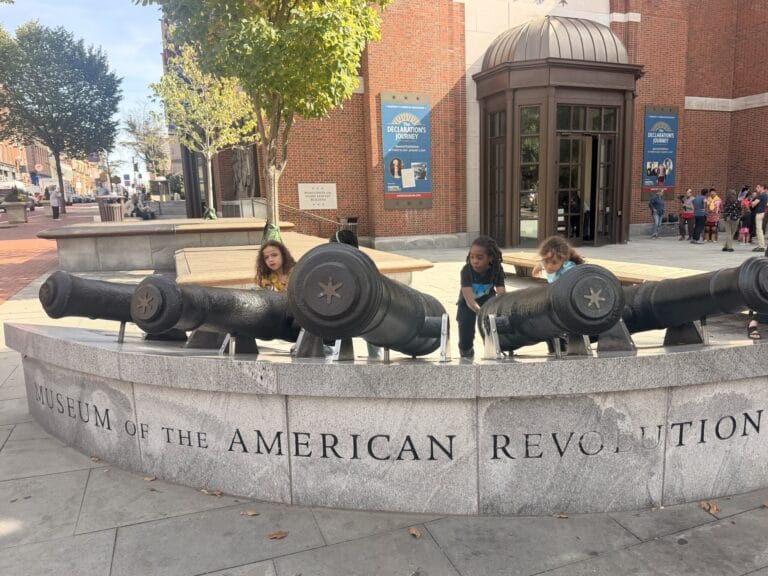
For example, a visit to a historical museum can support social studies, reading, and writing. Gardening can introduce biology, ecology, and measurement.
Even something as simple as making ice cream in a bag can turn into a fun science lesson about freezing points and how temperature affects matter.
Homeschooling gives you the flexibility to connect different subjects instead of always teaching them separately.
3. Figure Out Where Your Child Is Academically
One of the biggest advantages of homeschooling is being able to teach your child at their actual learning level instead of strictly following a grade-level label.
A child might be ahead in reading but need extra practice with multiplication. Another might understand science concepts well but struggle to put their thoughts into writing.
That’s perfectly fine.
Before choosing curriculum, think about:
- Which skills has your child already mastered?
- Where do they need extra practice?
- What subjects come naturally to them?
- Which subjects cause frustration?
- Do they learn better through reading, watching, listening, or hands-on activities?
You can use free placement tests, review grade-level learning standards, or look through sample curriculum lessons to help determine an appropriate starting point.
I like using grade-level expectations as a guide rather than treating them as an inflexible checklist.
Remember: You don’t have to teach every subject at the same grade level. One of the benefits of homeschooling is being able to move ahead or slow down when necessary.
4. Choose Curriculum That Fits Your Family
There’s no shortage of homeschool curriculum available, and it’s easy to get caught up in trying to find the perfect program.
But you don’t need the most popular curriculum, and you certainly don’t need to buy an expensive all-in-one package.
Some families prefer textbooks and workbooks. Others use online programs, unit studies, library books, hands-on activities, or a combination of different resources.
We’ve used resources such as Khan Academy, IXL, XtraMath, Night Zookeeper, and Generation Genius at different points in our homeschool journey.
What works well for one child or subject may not work as well for another.
Questions to Ask Before Buying Curriculum
Before committing to a program, consider:
- Budget: Can we afford this for the entire school year?
- Teaching time: Does it require extensive parent preparation?
- Independence: Can my child complete some lessons independently?
- Flexibility: Can we skip, repeat, or rearrange lessons?
- Learning needs: Will this approach help my child understand the material?
- Family schedule: Will this fit into our regular routine?
Whenever possible, try a free lesson or sample before purchasing.
It’s also okay to change curriculum midway through the year if something isn’t working.
A curriculum is a tool to support your child’s education, not something your family has to follow at all costs.
5. Make a Simple Yearly Homeschool Plan
Once you’ve selected your main subjects and resources, create a general plan for the year.
You don’t need to schedule every lesson for the next nine months. Instead, focus on the skills and topics you’d like your child to cover.
For example, your yearly goals might include:
Math
- Strengthen multiplication and division skills
- Learn to work with fractions and decimals
- Practice solving multistep word problems
Language Arts
- Read independently and discuss books
- Improve spelling, grammar, and punctuation
- Write organized paragraphs and longer compositions
Science
- Explore ecosystems and food chains
- Learn about weather and the water cycle
- Complete simple experiments
Social Studies
- Study American history
- Learn basic geography and map-reading skills
- Explore communities, government, and different cultures
These are examples, not a required curriculum for every age or grade.
I recommend keeping your yearly goals relatively simple. You can always add more as your children progress.
Should You Follow a 36-Week Homeschool Schedule?
Many homeschool families organize their school year into 36 weeks, which is similar to a traditional nine-month school calendar.
You can use this as a planning framework without feeling obligated to follow it exactly.
For example, you might divide your curriculum into:
- Four 9-week periods
- Six 6-week periods
- Nine 4-week units
You can also homeschool year-round, take longer breaks, or adjust your schedule around family activities.
The best calendar is one that gives your family enough structure to make progress without creating unnecessary stress.
6. Break Your Yearly Plan Into Smaller Goals
A yearly curriculum plan gives you direction, but smaller goals make the actual teaching easier to manage.
Instead of planning every single day months in advance, try organizing your lessons a few weeks at a time.
For example, if your child is studying ecosystems, a four-week science unit might look like this:
| Week | Focus |
|---|---|
| Week 1 | What are ecosystems? |
| Week 2 | Food chains and food webs |
| Week 3 | Habitats and adaptations |
| Week 4 | Hands-on project and review |
During each week, you might use a combination of books, videos, worksheets, nature walks, and simple activities.
This approach is especially helpful when your children become interested in a topic and want to explore it further.
You can spend extra time on something they love without throwing off an entire year’s schedule.
7. Create a Homeschool Routine That Works for Your Family
Having a curriculum plan is helpful, but figuring out when to use it is just as important.
One thing I’ve learned over the years is that a homeschool routine doesn’t have to be a strict schedule.
In our house, we generally prioritize schoolwork in the morning. We don’t necessarily start at the exact same time every day, and my kids don’t have assigned desks or a designated classroom.
They can work wherever they’re comfortable, as long as they’re focused and completing their assignments.
Our general approach is to get the main schoolwork done first so they have the rest of the day for playing, activities, and pursuing their own interests.
Example of a Flexible Elementary Homeschool Routine
| Part of the Day | Activity |
|---|---|
| Morning | Math and language arts |
| Late morning | Reading, science, or social studies |
| Afternoon | Outdoor play, projects, co-op, sports, or field trips |
| Evening | Family reading or optional educational activities |
This is just an example. Some children do their best work in the afternoon, while others thrive with an earlier start.
If you’re homeschooling multiple children, you can teach some subjects together while adjusting individual assignments to their skill levels.
The goal is to create a routine your family can realistically maintain.
8. Include Your Child’s Interests
One of my favorite things about homeschooling is being able to build lessons around the things my kids are genuinely interested in.
If your child loves marine animals, for example, you can turn that interest into an entire unit study.
A marine biology unit might include:
- Science: Ocean ecosystems, marine mammals, and conservation
- Math: Measuring ocean depths and comparing animal sizes
- Reading: Nonfiction books about ocean life
- Writing: Researching and writing about a favorite sea creature
- Geography: Locating oceans, coral reefs, and marine habitats
- Art: Creating ocean-inspired crafts and models
Your child is still developing important academic skills, but the lessons become more engaging because they’re connected to something meaningful.
You don’t need to turn every interest into a complete curriculum. Sometimes a library book, documentary, or afternoon project is enough.
If your kids enjoy creative projects, you can also incorporate hands-on activities like our butterfly suncatcher craft while learning about butterflies, insects, and life cycles.
9. Use Free and Affordable Homeschool Resources
Homeschooling doesn’t have to cost a fortune.
There are plenty of excellent free and inexpensive educational resources available, especially if you’re willing to combine different materials.
Some of the resources we’ve used include:
Khan Academy
Khan Academy offers free lessons and practice exercises in math and other academic subjects. It’s useful for reviewing skills or introducing new concepts.
XtraMath
XtraMath focuses on developing math fact fluency through short practice sessions.
Night Zookeeper
Night Zookeeper is a creative writing program that encourages children to practice writing, vocabulary, and spelling through interactive activities.
IXL
IXL offers skill-based practice across multiple subjects. It’s helpful for identifying areas that need additional attention.
Generation Genius
Generation Genius provides engaging science and math videos, along with related educational activities.
Other useful resources include your local library, educational YouTube channels, museum websites, printable worksheets, and community programs.
We also love incorporating hands-on projects. Activities like our Earth Day stamping craft can help introduce environmental science while giving kids a chance to be creative.
You don’t need a separate paid subscription for every subject.
Start with what you already have, see what your children need, and add resources gradually.
10. Make Room for Field Trips and Real-World Learning
Some of the most memorable homeschool lessons happen outside the house.
Museums, historical sites, zoos, aquariums, libraries, parks, and nature centers can all provide valuable learning experiences.
You can also incorporate learning into everyday activities.
For example:
- Cooking provides opportunities to practice fractions and measurements.
- Grocery shopping introduces budgeting and basic math.
- Gardening teaches plant biology and responsibility.
- Hiking encourages observation and environmental science.
- Visiting historical landmarks helps bring history to life.
One of the things I love about homeschooling is being able to take advantage of educational opportunities as they come up.
We’ve visited museums, historical sites, and other educational attractions, and I enjoy finding ways to connect these experiences to what we’re studying.
Sometimes that means doing a little research before our visit. Other times, we’ll discuss what we learned afterward or complete a related activity.
Not every field trip needs a worksheet or formal assignment, though. Exploring and experiencing new places is valuable on its own.
Even local outings, like visiting an arboretum or trying other outdoor family activities, can be opportunities to learn about the natural world.
11. Track Progress Without Overcomplicating Things
Keeping track of your child’s progress can help you see how far they’ve come and identify areas that need additional practice.
You don’t necessarily need elaborate grading systems or detailed lesson plans.
Some simple ways to document learning include:
- Keeping completed worksheets and writing samples
- Recording books your child has read
- Saving photos of projects and experiments
- Tracking completed lessons in online programs
- Writing short notes about skills mastered and topics that need review
- Maintaining a homeschool portfolio
Be sure to keep any records required by your state.
I also think it’s important to look beyond test scores and completed assignments.
Can your child explain what they’ve learned? Are they becoming more independent? Are they asking questions and making connections?
Those are meaningful signs of progress, too.
12. Review and Adjust Your Homeschool Curriculum
Your homeschool plan isn’t set in stone.
What works beautifully in September might not be the best fit by January, and that’s okay.
Every few weeks, take some time to evaluate how things are going.
Ask yourself:
- Is my child making progress?
- Are our lessons taking too much time?
- Does my child need more practice in a particular area?
- Is the curriculum too easy or too challenging?
- Are we enjoying the way we’re learning?
- Is our routine still working for our family?
Sometimes you’ll need to slow down. Sometimes you can move ahead more quickly.
And sometimes you’ll realize that a curriculum you were excited about simply isn’t a good match.
Don’t be afraid to make changes.
Flexibility is one of the greatest benefits of homeschooling, so take advantage of it.
Free Printable Homeschool Curriculum Planner
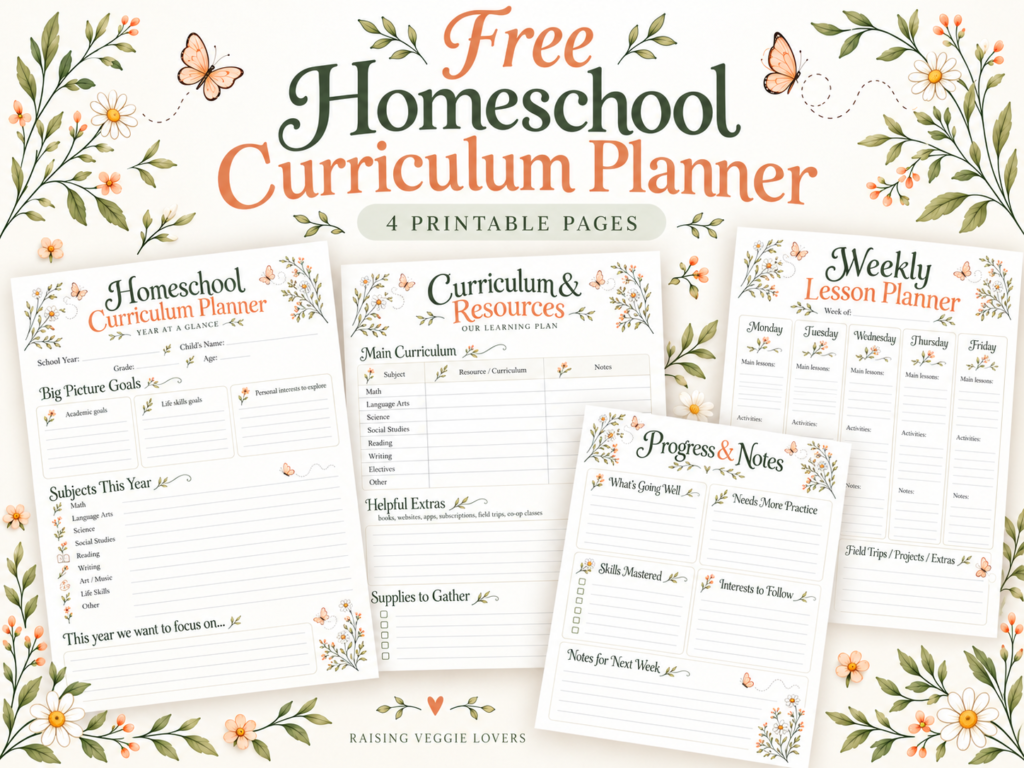
To make homeschool curriculum planning a little easier, I’ve created a free four-page Homeschool Curriculum Planner!
It’s designed to help you organize your homeschool year without complicated spreadsheets or elaborate planning systems.
The printable includes:
- Year at a Glance: Record your child’s grade, learning goals, interests, and subjects for the year.
- Curriculum & Resources: Keep track of the curriculum, websites, books, and supplies you’re using.
- Weekly Lesson Planner: Organize your lessons, activities, and priorities for the week.
- Progress & Notes: Document your child’s accomplishments, areas needing extra practice, and ideas for future lessons.
The planner features a whimsical botanical design with butterflies, flowers, and soft colors. It’s also designed with plenty of white space to make it easy to print and use.
Download your free Homeschool Curriculum Planner below!
You can print the entire planner or just the pages you need. I recommend keeping them in a binder so you can easily refer back to your goals and see how much progress your children have made throughout the year.
Frequently Asked Questions About Homeschool Curriculum Planning
Do I Need to Buy a Complete Homeschool Curriculum?
No. Many families combine resources from different publishers, websites, workbooks, and hands-on activities. The important thing is choosing materials that meet your child’s educational needs and your state’s requirements.
How Many Hours a Day Should I Homeschool?
There isn’t one correct answer. The amount of time needed depends on your child’s age, attention span, learning needs, and the activities you’re completing.
Younger children often do well with shorter focused lessons, while older students typically spend more time on independent reading, writing, and assignments.
Check your state’s requirements for any applicable instructional-time rules.
Should I Plan My Entire Homeschool Year in Advance?
Having general yearly goals is helpful, but you don’t need to plan every lesson ahead of time.
I prefer having a broad outline and then planning smaller sections as we go. This makes it easier to adjust when something takes more or less time than expected.
Can I Homeschool Two Children in Different Grades?
Absolutely! Some subjects, such as science, history, art, and geography, can often be taught together using age-appropriate assignments.
Math and language arts usually require more individualized instruction because children may be working at different skill levels.
What if My Child Falls Behind the Curriculum Schedule?
First, figure out why.
Your child might need additional practice, the lessons may be too challenging, or your schedule may simply be unrealistic.
It’s better to focus on understanding and mastery than to rush through lessons just to stay on schedule.
If your child is consistently struggling, consider getting additional support or reassessing the learning materials.
Final Thoughts: Make Your Homeschool Curriculum Work for You
Planning your homeschool curriculum doesn’t have to mean filling every hour of the day with lessons or following an elaborate schedule.
Start with your state’s requirements, identify your child’s needs, choose resources that fit your family, and create a flexible plan you can adjust throughout the year.
And remember, homeschooling is about more than checking off academic subjects.
It’s about helping your children develop skills, explore their interests, become independent learners, and discover the world around them.
The best homeschool curriculum is one that helps your children learn while still leaving room for your family to enjoy life together.
And if you need a little help getting organized, don’t forget to grab your free Homeschool Curriculum Planner above!