

Cauliflower + Pea Baby Food Puree
Updated October 18, 2026.
As an Amazon Associate, I earn from qualifying purchases. This post may contain affiliate links. Read my disclosure policy.
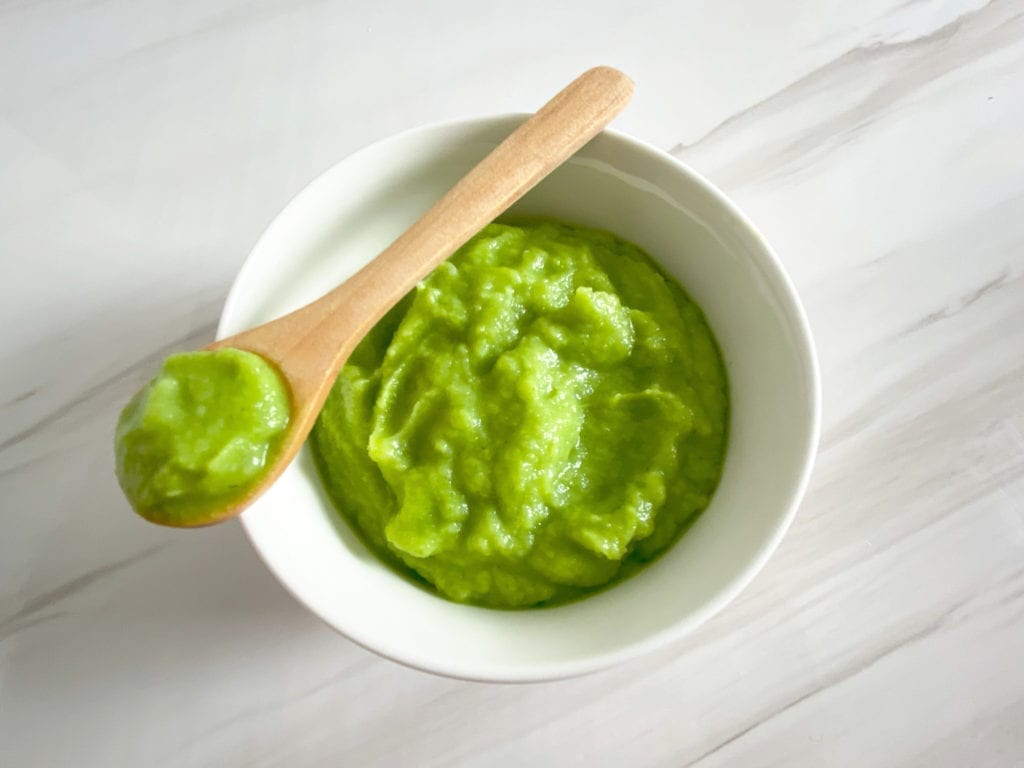
This easy cauliflower and pea baby food puree combines tender cauliflower, sweet peas, and a little fresh dill. It has a mild, savory flavor and can be blended smooth or left slightly thicker for babies who are ready for more texture. It is a simple homemade recipe for babies around 6 months and older who are developmentally ready for solid foods.
When I was little, one of my favorite meals was mashed potatoes with peas, made for me by my grandma. I can still remember sitting in front of the TV watching Sesame Street and happily eating that comforting combination!
Years later, that childhood memory inspired me to make a mashed potato and pea puree for Emmalee. But, of course, I didn’t have any potatoes the day I wanted to make it. I did have cauliflower, though, and decided to give that a try instead!
Cauliflower blends into a wonderfully creamy mash, and its mild flavor goes so well with peas. I added a few sprigs fresh dill, washed to brighten everything up. The result was an easy vegetable puree inspired by one of my favorite childhood meals.
What nutrients are in cauliflower and pea baby food puree?
Cauliflower contains vitamin C and fiber, along with other nutrients. The fiber can help support healthy digestion as part of a varied diet.
Peas add fiber, some plant-based protein, and vitamins and minerals to this puree. They also lend a naturally sweet flavor.
Dill adds a fresh, herby flavor. Using small amounts of herbs is one way to introduce babies to a wider variety of tastes without adding salt.

How long will homemade baby food last?
Refrigerate homemade baby food promptly in a clean, airtight container and use it within 1–2 days. Discard any leftovers that have been fed directly from your baby’s bowl.
If you make a larger batch, freeze it in individual portions and use within 1–2 months. Thaw in the refrigerator or using another safe method, never on the counter. Click here for more information, tips, and tricks on storing homemade baby food.
For easy portioning, these baby food freezer storage trays are helpful for freezing small amounts of puree. I like that they have snug-fitting lids and stack neatly.
How to make cauliflower and pea baby food puree

Ingredients:
- 1 cup cauliflower florets
- 1/2 cup frozen peas
- a few sprigs fresh dill, washed
- water, prepared baby formula, or breast milk, as needed
Equipment:
1. Prepare the steamer.
Fill a pot with a few inches of water and place a steamer basket inside. Make sure the water does not touch the basket.
2. Steam the cauliflower.
Wash and cut the cauliflower into small florets. Add 1 cup of cauliflower to the steamer basket, cover, and steam over medium heat for 5 minutes.

3. Add the peas.
Add 1/2 cup of frozen peas to the basket. Cover and steam for another 5 minutes, or until the peas are fully cooked and the cauliflower is very tender and easily mashed with a fork.

4. Blend the puree.
Allow the vegetables to cool slightly, then transfer them to a blender or food processor with the fresh dill.
Blend until smooth, adding a little water as needed to reach your desired consistency. You can also use prepared baby formula or breast milk once the vegetables have cooled.


5. Cool and serve.
Check the consistency and temperature before serving. Adjust the texture to suit your baby’s developmental stage.
Note: A blender will generally give you a smoother puree than a food processor, especially when working with ingredients that have skins or fibers.
If you’re looking for an extra-smooth consistency, a high-powered blender can be especially helpful.
Although I’m using a high-powered blender to showcase this recipe, I actually made a lot of homemade baby food for my kids using a food processor!
As my babies became more comfortable eating solids, I liked introducing different age-appropriate textures instead of serving only perfectly smooth purees. Offering a variety of textures helps babies develop their eating skills as they grow.
In fact, this KitchenAid food processor is the one I used. I loved it because it was compact enough for my small kitchen but still powerful enough to make homemade baby food.
Ultimately, you don’t need any special equipment to make baby food. Whether you use a blender or food processor, the most important thing is preparing the puree to a consistency that’s appropriate for your baby’s developmental stage.
Frequently asked questions
When can babies eat cauliflower and peas? Babies can try well-cooked, appropriately pureed cauliflower and peas when they are ready for solid foods, usually around 6 months. If an ingredient is new, introduce it separately first so you can watch for a reaction.
Can I use fresh peas instead of frozen? Yes. Cook fresh peas until tender before blending. Frozen peas work well and make this recipe convenient year-round.
Can I make this puree thicker? Yes! Start with very little added liquid, and use more only if necessary. As babies develop their eating skills, they can gradually try thicker, age-appropriate textures.
Can I freeze cauliflower and pea baby food? Yes. Freeze the cooled puree promptly in small, airtight portions and use within 1–2 months.
Try these other yummy baby food recipes!
- Butternut Squash + Sage Baby Food Puree
- Okinawan Sweet Potato Baby Food Puree
- Apple + Nutmeg Baby Food Puree
- Quinoa Baby Cereal
- Mango Baby Food Puree, Three Ways
Baby feeding note
This recipe is for babies who are developmentally ready for solid foods, typically around 6 months old. The information here is educational and not a substitute for medical advice. Offer foods in a texture appropriate for your baby’s skills, supervise all meals, and talk with your pediatrician about feeding readiness, allergies, or nutrition concerns.

Cauliflower and Pea Baby Food Puree
Ingredients
Equipment
Method
- Fill a pot with a few inches of water and place a steamer basket inside. Make sure the water does not touch the basket.
- Wash and cut the cauliflower into small florets. Add 1 cup of cauliflower to the steamer basket, cover, and steam over medium heat for 5 minutes.
- Add 1/2 cup of frozen peas to the basket. Cover and steam for another 5 minutes, or until the peas are fully cooked and the cauliflower is very tender and easily mashed with a fork.
- Allow the vegetables to cool slightly, then transfer them to a blender or food processor with the fresh dill.Blend until smooth, adding a little water as needed to reach your desired consistency. You can also use prepared baby formula or breast milk once the vegetables have cooled.
- Check the consistency and temperature before serving. Adjust the texture to suit your baby's developmental stage.
Notes
-
Recipe Tips:
- Frozen peas make this recipe convenient, but fresh peas work just as well. Cook until tender before blending.
- For an extra-smooth puree, use a high-powered blender. Pea skins may leave a little texture when using a food processor.
- Add liquid gradually to avoid making the puree too watery.
- Try substituting dill with a little fresh parsley for a different flavor.
- For babies ready for thicker textures, use less liquid when blending.
- Refrigerate homemade baby food promptly in an airtight container for 1–2 days or freeze individual portions for 1–2 months.
- Discard any leftovers from your baby’s serving bowl.