
12 Fun Ways to Encourage Your Child’s Love of Dinosaurs

For some kids, dinosaurs aren’t just an interest. They are the interest. You may find yourself discussing T. rex teeth over breakfast, stepping around plastic Triceratops in the hallway, or being corrected because you accidentally called a pterosaur a dinosaur.
Rather than waiting for the dinosaur phase to pass, why not embrace it?
A fascination with dinosaurs can open the door to science, reading, art, imaginative play, and plenty of hands-on learning. And for homeschooling families, it’s a wonderful opportunity to explore different subjects through something your child already loves.
Whether your child is just discovering dinosaurs or can already name more species than you can pronounce, here are 12 fun ways to encourage their curiosity and turn their love of dinosaurs into meaningful learning experiences.
1. Let Their Questions Lead the Way
Kids tend to learn more enthusiastically when they’re genuinely interested in a subject, so pay attention to the questions your child is already asking.
Why did some dinosaurs have feathers? How do fossils form? What did a Stegosaurus eat?
Instead of immediately moving on to the next workbook page, consider turning one of those questions into a mini lesson.
You don’t have to know all the answers, either! Saying, “I don’t know. Let’s find out!” shows your child that learning is something we continue doing throughout our lives.
Try this: Start a dinosaur question journal.
Whenever your child asks something you don’t know, write it down. Choose one question each week to investigate together.
Younger children can draw pictures of what they learn, while older children can practice researching and writing short explanations.
Following your child’s natural curiosity is also a wonderful way to encourage creativity in your child while helping them develop a love of learning.
2. Build Dinosaur Books Into Your Reading Routine
A trip to the library is one of the easiest ways to encourage a dinosaur-loving child.
Let your child choose books that match their interests and reading level. Younger children might enjoy colorful picture books and silly dinosaur stories, while older kids may be ready to explore paleontology, fossils, prehistoric ecosystems, and individual species.
Try mixing fiction with nonfiction, too.
After reading a funny dinosaur story, talk about which details were scientifically accurate and which were added for entertainment. Unfortunately, there’s no evidence that dinosaurs wore pajamas!
Try this: Create a dinosaur fact sheet.
Have your child choose a favorite dinosaur and create a fact sheet using information from a library book.
They can include:
- Its name
- What it ate
- When it lived
- Where its fossils have been found
- One interesting fact
This simple activity combines reading comprehension, research, science, and writing without feeling like a traditional assignment.
3. Learn About Different Dinosaur Eras
It’s easy for kids to imagine every dinosaur roaming around together, but different species lived millions of years apart.
Dinosaurs lived during the Mesozoic Era, which is divided into three periods: Triassic, Jurassic, and Cretaceous.
Learning about these periods can help children understand timelines, changing environments, and just how enormous Earth’s history really is.
For example, Stegosaurus lived during the Jurassic Period, while Triceratops and Tyrannosaurus rex lived much later during the Cretaceous Period.
Once your child understands the basics, make it fun by comparing the dinosaurs that lived during different periods. You could read about the differences between Jurassic vs. Cretaceous dinosaurs, choose a favorite from each period, and debate which prehistoric lineup wins the family vote.
Try this: Make a dinosaur timeline.
Use a long strip of paper and divide it into the three periods. Then have your child draw or print pictures of dinosaurs to place in the correct sections.
This is an easy, hands-on way to introduce sequencing and prehistoric history.
4. Turn Dinosaur Toys Into Learning Tools
If you have plastic dinosaurs scattered around your house, you already have some great learning materials!
Dinosaur figures can be used for sorting, counting, measuring, comparing, and imaginative play.
Younger children can sort their dinosaurs by size, color, or number of legs. Older children can research each species and organize them by diet or the time period in which they lived.
Try this: Sort dinosaurs by what they ate.
Create two categories on a sheet of paper:
- Herbivores (plant-eaters)
- Carnivores (meat-eaters)
Have your child investigate what each dinosaur ate, then place the toys into the appropriate groups.
For an extra challenge, encourage them to look closely at each dinosaur’s physical characteristics. How might its teeth, legs, or neck have helped it survive?
Older kids can also create museum-style information cards to display alongside their dinosaur figures.
5. Connect Dinosaurs to the Natural World
Dinosaurs offer a surprisingly natural introduction to ecology.
Instead of studying each species as an isolated animal, encourage your child to think about the environment surrounding it.
What plants were available for food? What other animals shared its habitat? Was the environment covered in forests, rivers, or open landscapes?
Scientists use fossils and other geological evidence to reconstruct prehistoric ecosystems and understand how dinosaurs may have lived within them.
Try this: Create a prehistoric habitat.
Have your child build a prehistoric habitat in a shoebox.
Use paper, rocks, twigs, clay, and other materials to recreate the environment of a favorite dinosaur.
Before building, research what scientists know about the plants and animals that lived alongside it.
This activity combines science and creativity while encouraging children to think about how living things interact with their surroundings.
6. Get Creative With Dinosaur Arts and Crafts
Not every dinosaur lesson needs to involve memorizing facts. Art gives kids an opportunity to take what they’ve learned and turn it into something of their own.
They can draw dinosaurs, sculpt them from clay, create prehistoric dioramas, or design an imaginary museum exhibit.
One fun way to explore fossils through hands-on learning is by making your own dinosaur fossil rocks!
Try this: Make DIY Dinosaur Fossil Rocks!
Kids can create their own pretend dinosaur fossils using simple materials. It’s a fun way to combine crafting, imaginative play, and a little prehistoric science.
As they work, talk about how real fossils form over millions of years and how paleontologists use them to learn about dinosaurs and other prehistoric creatures.
Follow our DIY Dinosaur Fossil Rocks tutorial for a fun, hands-on activity that’s perfect for little dinosaur lovers.
For another dinosaur-themed craft, try our dinosaur Valentine’s Day card with a free printable. It’s an adorable activity for kids who love dinosaurs, whether it’s Valentine’s Day or they just want to make something special for a friend.
For an extra science connection, introduce your child to paleoart. Paleoartists combine artistic skills with fossil evidence to create illustrations of animals no human has ever actually seen. The Smithsonian even offers dinosaur-drawing resources that incorporate scientific evidence.
7. Bring Dinosaurs Into the Kitchen
Who says dinosaur learning has to stay out of the kitchen?
Cooking and baking together are great opportunities to practice measuring, counting, following directions, and fine motor skills.
And with a dinosaur theme, even an ordinary snack can become a fun learning activity.
Use dinosaur-shaped cookie cutters for sandwiches, make prehistoric snack plates, or create edible fossils.
Try this: Bake dinosaur fossil cookies!
Dinosaur fossil cookies are a fun way to combine baking with a prehistoric theme. Kids can help measure ingredients, prepare the dough, and create fossil-inspired designs.
Our dinosaur fossil cookies are a fun kitchen activity for little dinosaur lovers.
While you’re baking, talk about how paleontologists discover and study fossils. What kinds of clues might a fossil leave behind? How can scientists use those clues to learn about animals that lived millions of years ago?
You can also discuss dinosaur diets. Teeth, fossilized stomach contents, and other evidence help scientists determine what different dinosaurs may have eaten.
For another fun kitchen science activity, try making ice cream in a bag. It’s an easy experiment that teaches children about freezing temperatures while making a delicious treat.
8. Encourage Movement With Dinosaur Games
Learning about enormous prehistoric animals doesn’t have to happen while sitting still.
Have younger kids stomp like a giant sauropod, pretend to search for food like a Triceratops, or imitate different dinosaur movements.
You can also incorporate math by measuring out the estimated length of a favorite dinosaur in your yard.
Try this: Have a dinosaur scavenger hunt!
Hide plastic dinosaur figures around your home or yard and give your child clues such as:
- Find a dinosaur with three horns.
- Find a dinosaur with a long neck.
- Find a dinosaur that walked on two legs.
- Find a dinosaur with plates along its back.
- Find a dinosaur that ate plants.
For older children, make the clues more challenging by including scientific names, diets, and prehistoric time periods.
Movement activities like these give energetic kids an opportunity to be active while reinforcing what they’ve learned.
9. Visit Museums and Explore Virtual Resources
Seeing a dinosaur skeleton in person can completely change a child’s understanding of just how enormous these animals were.
Look for natural history museums, science centers, fossil sites, traveling exhibits, or local geology programs that complement what you’ve been studying at home.
Before visiting, encourage your child to research a few dinosaurs they hope to see. Have them come up with questions they would like answered during the trip.
Try this: Make a museum journal.
Your child can draw their favorite exhibit, record three interesting facts, and write down one question they still have.
If visiting a museum isn’t possible, many museums offer virtual exhibits, educational videos, and online learning activities.
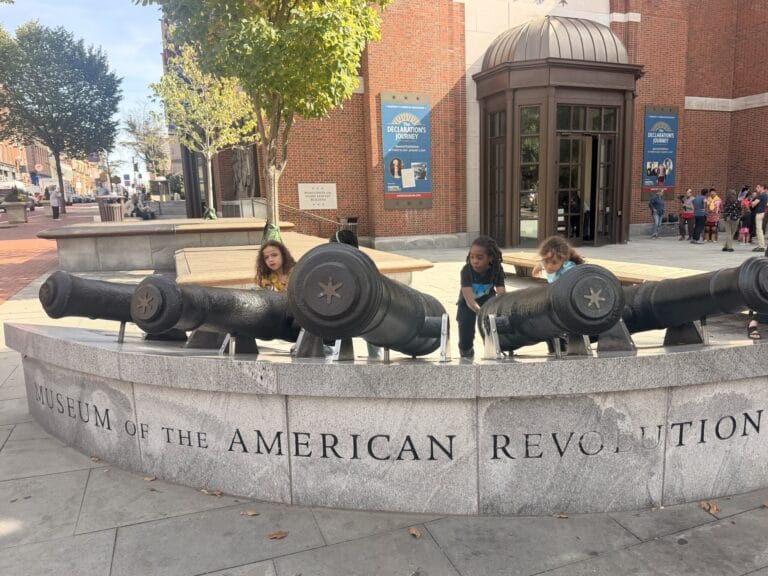
And remember, educational field trips don’t have to be limited to museums. Nature centers, historic sites, gardens, and science programs can all provide valuable learning opportunities outside the home.
10. Teach Them That Science Can Change
One of the most valuable lessons dinosaurs can teach children has nothing to do with memorizing species names.
Our understanding of prehistoric animals changes as researchers discover new fossils and reconsider existing evidence.
For example, scientists now know that many dinosaurs had feathers, so some modern illustrations look very different from those in older dinosaur books.
Point out these differences when your child notices them.
Instead of treating changing information as scientists getting something wrong, explain that science involves using the best available evidence and updating our understanding when new evidence appears.
Try this: Compare old and new dinosaur illustrations.
Look at illustrations of the same dinosaur from an older book and a newer scientific resource.
Ask your child:
- What looks different?
- What features are the same?
- Why might scientists have changed their interpretation?
- What evidence could help us learn more?
It’s a simple way to introduce critical thinking and the scientific process.
11. Let Your Child Become the Dinosaur Expert
Children love getting the opportunity to teach adults something, especially when it involves a subject they’re passionate about.
Give your child time to research a favorite dinosaur and then let them present what they’ve learned to the family.
They might create a poster, give a short presentation, build a model, or set up their bedroom as a miniature natural history museum.
Try this: Host a family dinosaur museum day.
Have your child arrange their dinosaur toys, artwork, and homemade fossil creations into different exhibits.
They can make labels, create admission tickets, and lead family members on a guided tour.
This is a fun way to practice researching, writing, organizing information, and public speaking.
And chances are, they’ll love being the expert for a change!
12. Follow Their Fascination as Far as It Goes
A dinosaur obsession might last six months, or your child could grow up wanting to become a paleontologist.
Either way, you don’t need to turn every moment of their interest into a formal educational activity.
Sometimes, the best thing you can do is give them good resources, answer their questions, and enthusiastically listen to yet another explanation of why their favorite dinosaur would definitely beat yours.
Let them reread their favorite dinosaur book, build elaborate prehistoric worlds with their toys, or spend an afternoon making dinosaur crafts.
When children see that their curiosity is worth taking seriously, they learn something even bigger than dinosaur facts: being excited about learning is a very good thing.
And that’s worth encouraging, no matter where their interests take them.